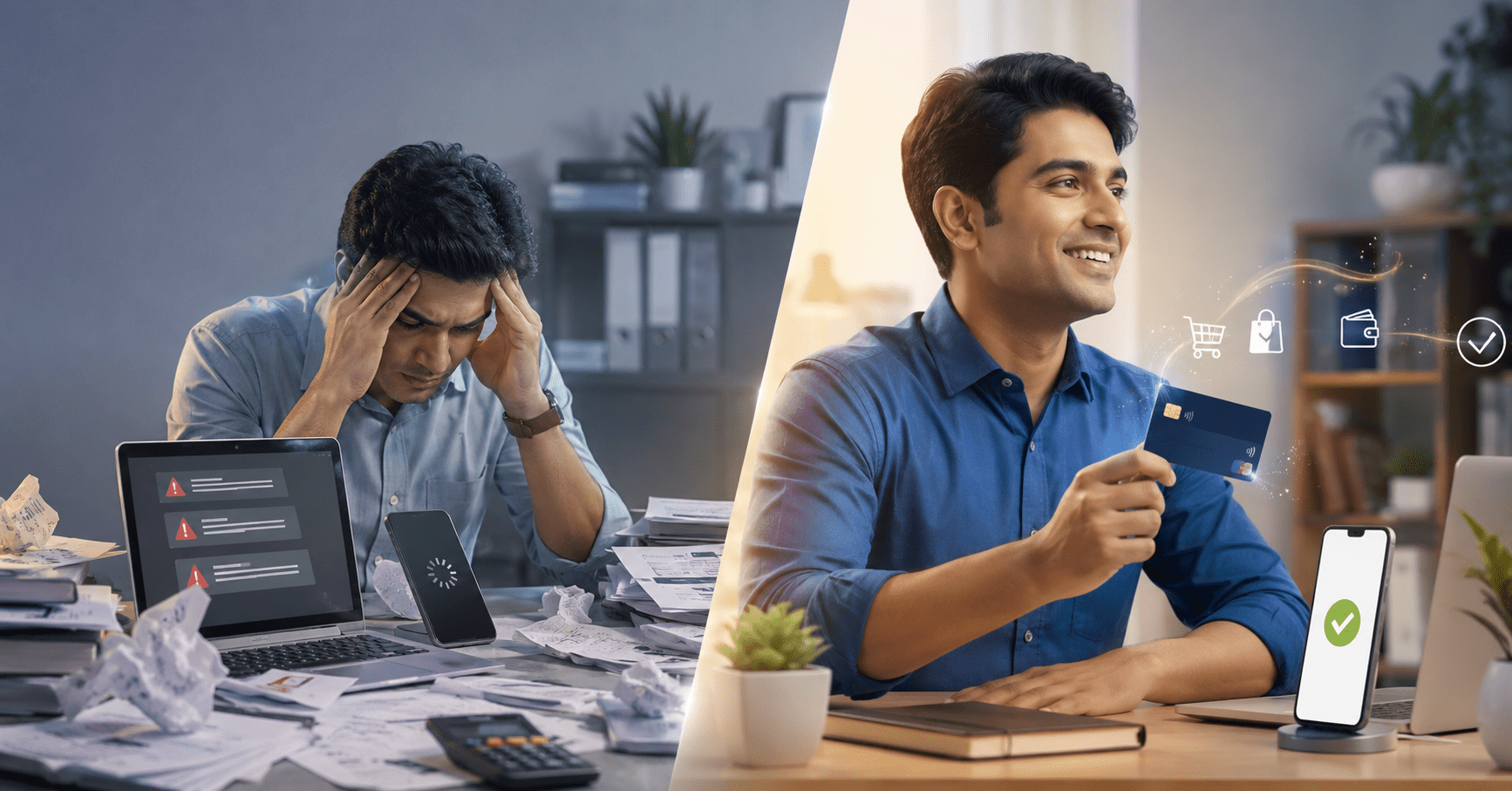

For years, I avoided credit cards like they carried some kind of financial plague.
Growing up, my uncle got buried under credit card debt that terrified everyone in our family. So when I landed my first real job at 24, I figured sticking to my debit card was the smart move. Turns out not all credit cards operate the same way, and some actually make sense for people who want control without the nightmare stories.
March 2024 rolled around and Priya mentioned she’d been paying with UPI through her credit card. I remember thinking, wait, that’s possible? I’d been using UPI for literally everything from buying vegetables to splitting dinner bills. Combining it with credit changed my entire perspective.
How UPI and Credit Cards Finally Made Sense Together
When I decided to get rupay credit card earlier this year, I had three main concerns: Would it actually be free like they claimed? Could I really link it to Google Pay without some weird workaround? And the biggest one, would I end up drowning in debt like my uncle did?
The application process took 12 minutes. They wanted my PAN, some basic income details since I earn around ₹42,000 monthly as a content writer, and pretty much nothing else that felt invasive.
My approval came through for ₹85,000. Not the maximum ₹3 lacs they advertise everywhere, but honestly that felt way safer for someone using credit for the first time.
My First Week Using Credit Through UPI
Scanning a QR code at my neighborhood grocery store and paying from my credit limit instead of my salary account felt completely bizarre at first.
Same exact UPI process I’d done hundreds of times before, except suddenly I had 48 days before money actually left my account. I bought groceries worth ₹3,247 on a Tuesday, and normally I’d be stressing about having enough balance before salary day. But this time I just paid and moved on.
The shopkeeper had no clue I used credit. His QR code just showed payment received like any other transaction. No awkward card swiping, no signatures, no “sorry, our terminal stopped working” excuses.
Where Credit Cards Usually Trip People Up
I’ve watched friends mess up with credit cards in ways that made me nervous about getting one myself.
Some forget it’s borrowed money and suddenly they’re buying stuff they never needed. Others pay only the minimum amount due and end up paying interest rates that honestly should be illegal.
I made a simple rule for myself: only use the card for expenses I was planning anyway. Groceries, totally fine. That ₹12,000 gaming console I’ve been eyeing but definitely don’t need, absolutely not.
The app shows my spending in real-time. Right now I’m at ₹23,100 used with 39 days left in my billing cycle, which feels manageable.
The Cashback Thing That Actually Works
I’m super skeptical about rewards programs in general.
My mom has a credit card giving her “points” she’s never figured out how to redeem in 6 years. But here’s the actual difference: they just give you real money back, not points or vouchers or whatever confusing system most banks use.
Last month I got ₹340 back on online shopping purchases. Just ₹340 that reduced my bill from ₹8,680 to ₹8,340 without me doing anything special.
The categories rotate monthly. April had electronics and online shopping at 15% cashback. May switched to food delivery and groceries at 12%. I don’t organize my entire life around chasing these categories, but when they align with purchases I’m making anyway, it’s a pleasant surprise.
Why the UPI Integration Changed My Mind
UPI adoption in India hit 83.7 billion transactions in 2023. We basically run our entire economy on UPI now. So having a credit card that couldn’t work with UPI felt like owning a smartphone without internet access.
What I genuinely love: I can split bills with friends using any UPI app without weird complications. When we went to Goa last month, I paid the ₹15,800 upfront through Google Pay using my credit card, and everyone sent me their share immediately. I didn’t need to wait for reimbursements or drain my savings account for a trip.
The virtual card appeared in my app within 2 minutes of approval. The physical card arrived 6 days later.
What Nobody Tells You About “Free” Cards
Here’s where I’ll be skeptical on your behalf since companies love throwing around “free” while meaning “free until we hit you with fees buried in small print.”
I read through their entire terms document twice like a paranoid person. Zero joining fee meant I paid literally nothing to get the card. Zero annual fee means I won’t pay anything next year either. And I’ve been using it for 7 months now without any sneaky charges randomly appearing on my statement.
The only way you actually pay interest is if you don’t pay your full bill on time. They give you up to 62 days interest-free, but after that the interest kicks in at around 36% annually. Just don’t do that. Pay the full amount before the due date and you’re fine.
I set a phone reminder for 2 days before my bill is due. Every month on the 18th I get a notification, check the app, and pay. Takes maybe 90 seconds total.
The Credit History Angle
Here’s something I didn’t care about initially but now realize actually matters: building credit history.
In India, your CIBIL score determines whether banks trust you for bigger loans down the road. I’m 27 now and nowhere near buying property, but people with no credit history get rejected outright or stuck with significantly higher interest rates.
Using a credit card responsibly and paying on time builds that history automatically. I checked my CIBIL score recently, and it went from “insufficient data” to 741 in just 7 months. Apparently that’s considered good.
When Credit Cards Don’t Make Sense
I’m not saying everyone needs a credit card because that would be dishonest.
My younger brother is 21 and honestly terrible with money. He’d definitely overspend within the first week. If you know you can’t track expenses or you tend to buy stuff impulsively without thinking, maybe wait until that changes.
But if you’re already responsible with money and just want breathing room between expenses and payday, credit cards work pretty well.
How I Use It Without Stress
My system is boring as hell. I use the card for regular monthly expenses like groceries, electricity bills, mobile recharges, occasional online shopping when I actually need something. I keep a simple note on my phone where I jot down approximate spending throughout the month.
Every Sunday morning with coffee, I open the app and verify my spending against my mental budget. If I’m trending high, I adjust. If I’m comfortable, I continue as usual.
The 62-day interest-free period gives me real flexibility, but I don’t use it as an excuse to spend money I genuinely don’t have. I treat the credit limit as emergency backup, not as extra income.
The Real Test: Emergency Situations
In June my laptop completely died during a deadline, and I had zero savings buffer because I’d just paid advance rent the week before.
A replacement laptop costs around ₹45,000 for something actually decent. Before having credit access, I would’ve either borrowed from family which is always embarrassing, or bought some cheap piece of garbage that’d break immediately.
Instead I used my credit card, got the laptop I actually needed, and paid it off over the next billing cycle when my salary came in. No drama, no guilt, no explaining myself to relatives.
Credit cards clicked for me in that moment. They’re not about buying stuff you can’t afford. They’re about managing timing when life doesn’t perfectly align with salary schedules, which in my experience is basically always.


