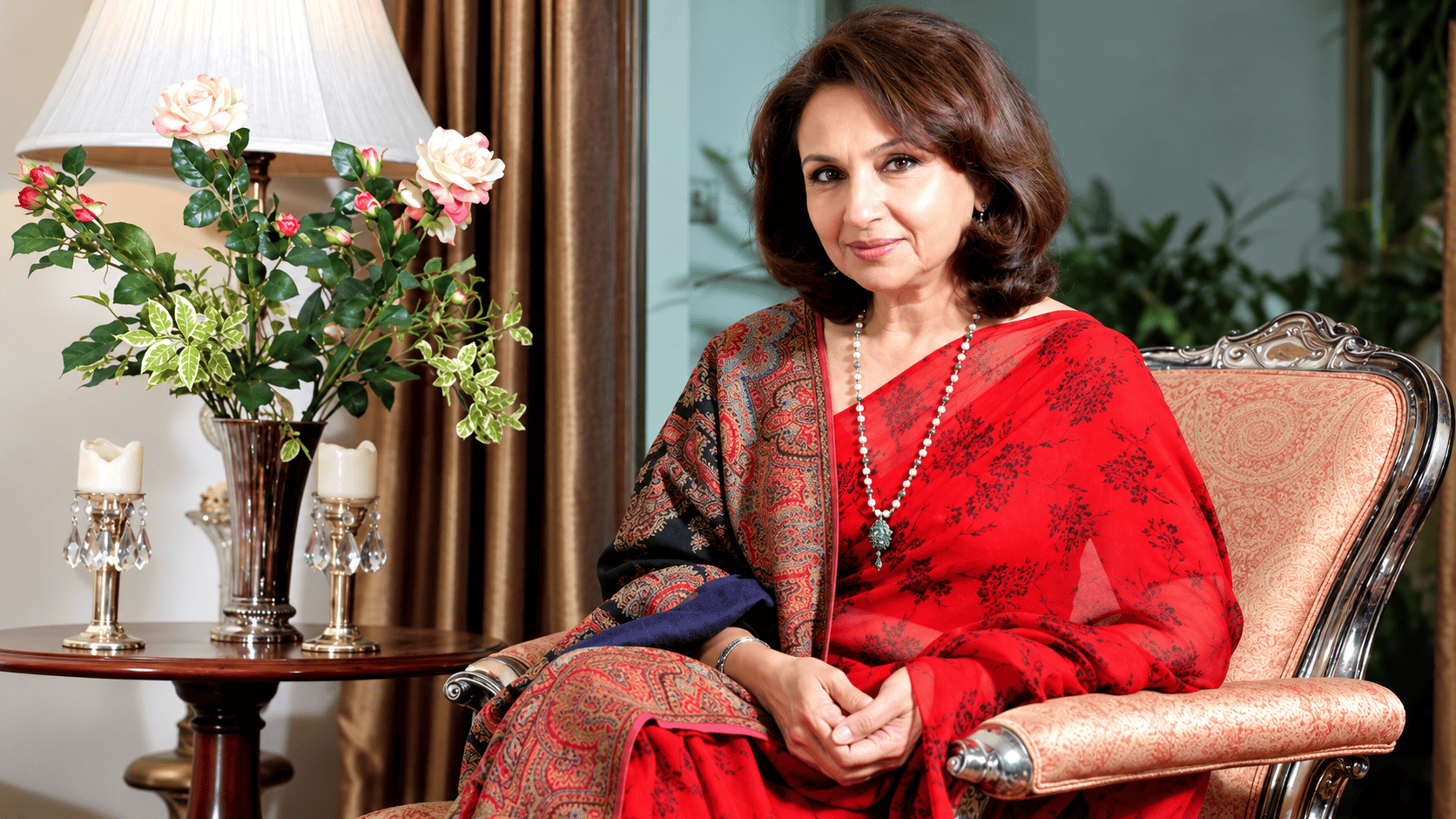

Like a timeless melody on the silver screen, Sharmila Tagore has brought grace, depth, and warmth to Indian cinema for more than six decades. Her expressive eyes, calm screen style, and strong acting made her one of the most respected actresses of her generation.
Sharmila was born on December 8, 1944 (81 years old) in Kanpur, Uttar Pradesh, India. She began acting at a young age and made her film debut in Satyajit Ray’s Bengali classic Apur Sansar in 1959. She later became a major name in Hindi cinema through films such as Kashmir Ki Kali, Waqt, Aradhana, Amar Prem, Chupke Chupke, and Mausam.
She is famous for playing emotional and complex characters with a natural acting style. Aradhana remains one of her most popular films, while her performance in Mausam is widely regarded as one of her finest works.
Among her biggest achievements are winning two National Film Awards and receiving the Padma Bhushan, India’s third-highest civilian honour, in 2013.
Quick Facts of Sharmila Tagore


| Full Name | Sharmila Tagore, also known as Begum Ayesha Sultana |
| Profession | Actress |
| Age | 81 years old |
| Date of Birth | December 8, 1944 |
| Nationality | Indian |
| Zodiac/Sun Sign | Sagittarius |
| Birthplace | Kanpur, Uttar Pradesh, India |
| Current Address | Mumbai, Maharashtra, India |
| Gender | Female |
Sharmila Tagore Early Life and Education

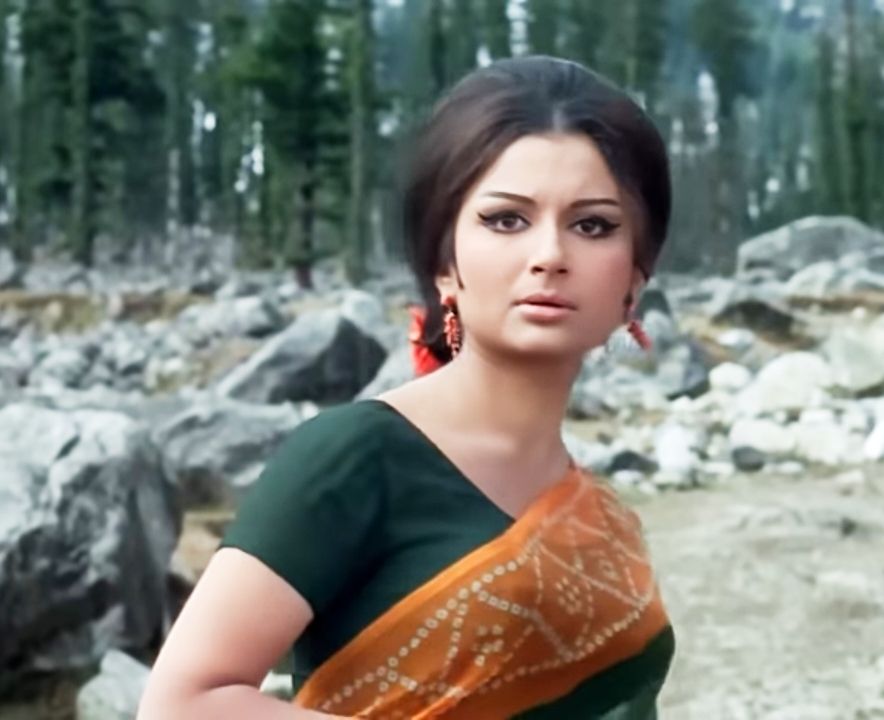
Sharmila Tagore was raised in a respected Bengali family known for its contribution to art, literature, and public life. Sharmila spent part of her childhood in Kolkata and grew up in a family where films, books, paintings, and other creative subjects were valued.
Education
Sharmila Tagore attended St. John’s Diocesan Girls’ Higher Secondary School in Kolkata and Loreto Convent in Asansol during her early years. However, her formal education ended prematurely at the age of 13 when she was cast by director Satyajit Ray in the 1959 film Apur Sansar (The World of Apu).
Due to strict school policies against acting, her principal objected to her continuing her studies, prompting her father to withdraw her so she could pursue film full-time.
Decades later, her extensive contributions to Indian cinema were formally recognized when she was awarded an Honorary Doctorate of Arts by Edinburgh Napier University in October 2012.
| School | St. John’s Diocesan Girls’ Higher Secondary School |
| Alma Mater | Edinburgh Napier University |
| Highest Qualification | Honorary Doctorate of Arts |
Sharmila Tagore Personal Life
Sharmila Tagore married Mansoor Ali Khan Pataudi, a former captain of the Indian cricket team and the Nawab of Pataudi, on December 27, 1968.
After converting to Islam, she adopted the name Begum Ayesha Sultana. Their marriage lasted until Mansoor Ali Khan Pataudi died on September 22, 2011, at the age of 70.
Children


The couple had three children. Their son, Saif Ali Khan, is an actor. Their elder daughter, Saba Ali Khan, is a jewellery designer. Their younger daughter, Soha Ali Khan, is an actress and author.
Family
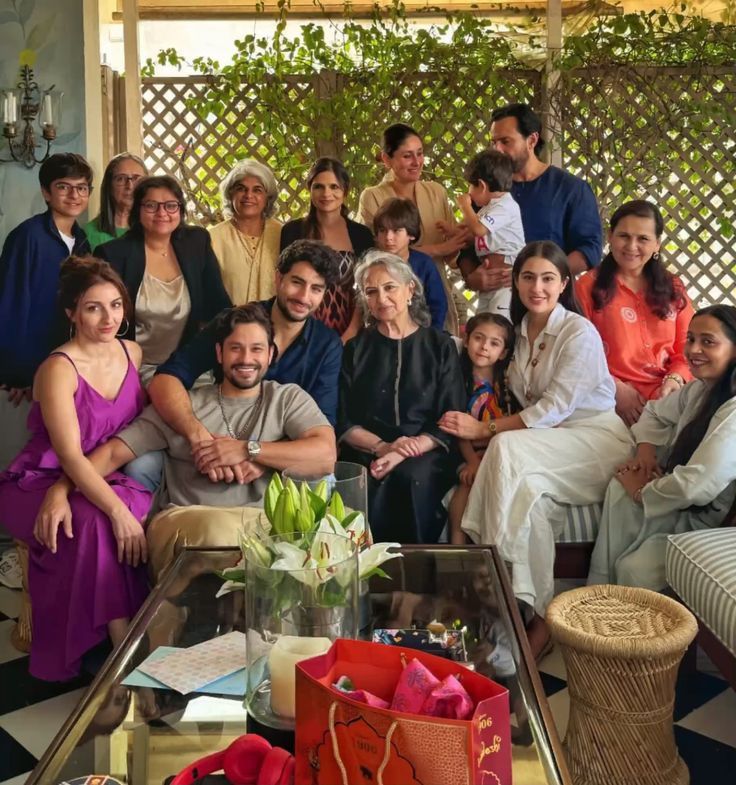
Sharmila belongs to the Bengali Tagore family. Through her family, she is related to poet Rabindranath Tagore and painter Gaganendranath Tagore. Her mother belonged to the Assamese Barua family.
Father
Her father, Gitindranath Tagore, worked as a general manager at the British India Corporation. He supported her decision to continue acting when her film work began affecting her school education.
Mother
Her mother was Ira Tagore, whose maiden name was Barua. She came from an Assamese family.
Siblings
Sharmila was the eldest of three daughters. Her younger sisters were Oindrila Kunda and Romila Sen. Oindrila appeared as a child artist in the Bengali film Kabuliwala in 1957 and later became an international bridge player.
| Relationship Status | Widowed |
| Late Husband | Mansoor Ali Khan Pataudi |
| Children | Son: Saif Ali Khan Daughters: Saba Ali Khan and Soha Ali Khan |
| Parents | Father: Gitindranath Tagore Mother: Ira Tagore |
| Siblings | Sisters: Oindrila Kunda and Romila Sen |
Sharmila Tagore Career
Sharmila Tagore began acting as a teenager under filmmaker Satyajit Ray. Her first film was Apur Sansar in 1959, the final part of Ray’s Apu Trilogy. She played Aparna opposite Soumitra Chatterjee.
Though she had no formal acting training, her calm and natural performance brought her immediate attention in Bengali cinema.
Ray cast her again as Doyamoyee in Devi in 1960. The film placed her at the centre of a serious story about faith, family control, and the treatment of women. She acted with Soumitra Chatterjee and Chhabi Biswas. These early roles showed that she could handle emotionally demanding characters at a young age.
Hindi Film Debut and Rise to Fame, 1964 to 1968
Sharmila entered Hindi cinema with Shakti Samanta’s Kashmir Ki Kali in 1964. She acted opposite Shammi Kapoor, and the film introduced her as a leading romantic actress. Its songs, scenic locations, and her pairing with Shammi Kapoor made her widely known among Hindi film viewers.
She followed it with Yash Chopra’s family drama Waqt in 1965. The large cast included Balraj Sahni, Sunil Dutt, Raaj Kumar, Shashi Kapoor, and Sadhana.
In 1966, she played the quiet and sensitive Uma in Hrishikesh Mukherjee’s Anupama, opposite Dharmendra. She also worked with Dharmendra in Devar and later became one of his best-known female co-stars.
Her Bengali work continued during the same period. In Satyajit Ray’s Nayak in 1966, she played journalist Aditi Sengupta opposite Uttam Kumar. The role was very different from her romantic Hindi films and allowed her to show restraint, intelligence, and emotional control.
Other films from this phase included Sawan Ki Ghata in 1966 with Manoj Kumar, An Evening in Paris in 1967 with Shammi Kapoor, Aamne Saamne in 1967 with Shashi Kapoor, and Mere Hamdam Mere Dost in 1968 with Dharmendra. These films established her as one of Hindi cinema’s leading actresses of the late 1960s.
Major Success and Acclaimed Roles, 1969 to 1974
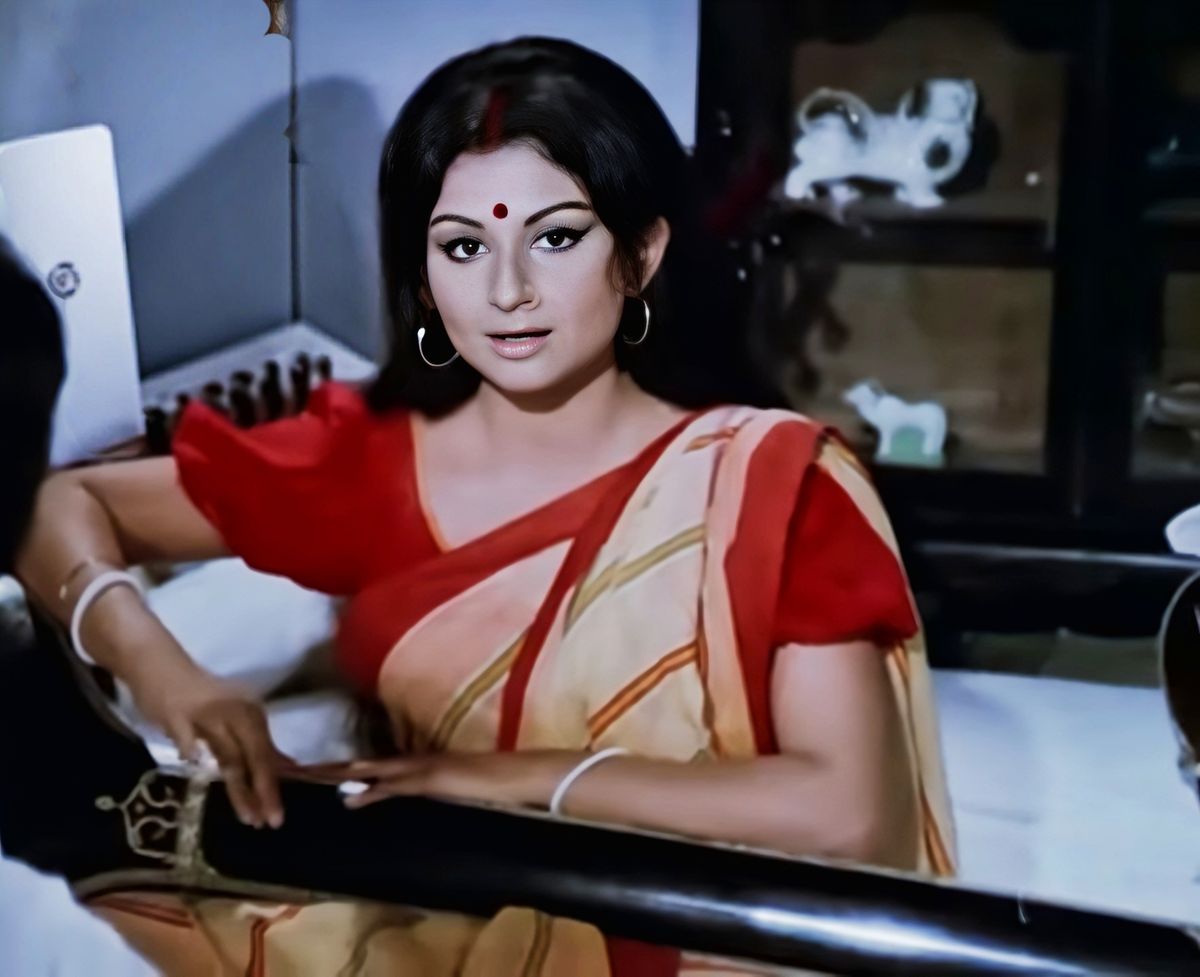
The year 1969 became a major point in Sharmila’s career. She appeared with Dharmendra in Hrishikesh Mukherjee’s Satyakam, playing a woman whose painful past affects her marriage and social position. The same year, she appeared opposite Rajesh Khanna in Aradhana.
In Aradhana, she played Vandana, a woman shown across different stages of her life. The film became one of the biggest successes of its period. It also began her famous screen partnership with Rajesh Khanna.
While working on Aradhana, she accepted Satyajit Ray’s offer to act in Aranyer Din Ratri. Released in 1970, the Bengali film featured Soumitra Chatterjee, Simi Garewal, Rabi Ghosh, Subhendu Chatterjee, and Samit Bhanja. Sharmila later described it as one of her most important films. A restored version was screened in the Cannes Classics section in 2025.
Her partnership with Rajesh Khanna continued through films such as Safar in 1970, Amar Prem in 1972, Maalik in 1972, Daag and Raja Rani in 1973, and Aavishkaar in 1974. They worked together in ten films. Their films often placed Sharmila in emotionally complex roles rather than using her only as a romantic lead.
Amar Prem became one of their best-remembered films. Sharmila played Pushpa, a woman rejected by her family who later forms a close bond with a lonely child. In Daag, she appeared with Rajesh Khanna and Rakhee. In Aavishkaar, she and Rajesh played a married couple facing emotional distance and conflict.
During this period, she also acted with Rajendra Kumar in Talash, Dharmendra in Yakeen, Feroz Khan in Safar, and Shashi Kapoor in Aa Gale Lag Jaa. Her choice of films moved between romance, family drama, social issues, and character-based cinema.
Strong Character Roles, 1975 to 1982
By the mid-1970s, Sharmila was taking on more mature characters. In Hrishikesh Mukherjee’s comedy Chupke Chupke in 1975, she acted with Dharmendra, Amitabh Bachchan, Jaya Bhaduri, Om Prakash, and Asrani. Her light comic performance showed a different side of her acting.
The same year, she appeared opposite Uttam Kumar in Amanush and worked with Amitabh Bachchan in Faraar.
One of the most important films from this period was Gulzar’s Mausam. She played both Chanda and Kajli, a mother and daughter whose lives are connected to Sanjeev Kumar’s character.
She later appeared in films such as Anand Ashram in 1977 and Griha Pravesh in 1979. In Gulzar’s Namkeen in 1982, she worked with Sanjeev Kumar, Shabana Azmi, and Kiran Vairale. The film centred on a mother and her daughters living under difficult financial and social conditions.
Unlike many actresses of her period, Sharmila continued working after her marriage in 1968 and after becoming a mother. She reduced her workload at different times, but she did not leave acting completely.
Selected Films During the 1980s and 1990s
During the 1980s, Sharmila became more selective about her roles. Her films included Doosri Dulhan in 1983, Sunny in 1984, Swati in 1986, and New Delhi Times in 1986. In New Delhi Times, she appeared opposite Shashi Kapoor in a political drama about journalism, corruption, and public responsibility.
She also appeared in Maa Beti in 1987 and Hum To Chale Pardes in 1988. In 1991, she joined the cast of Mira Nair’s Mississippi Masala. The international film featured Denzel Washington, Sarita Choudhury, and Roshan Seth and told the story of an Indian family displaced from Uganda.
Her later films during the decade included Aashiq Awara in 1993 and Mann in 1999. By this stage, she had moved from leading romantic roles to mothers, family heads, and supporting characters.
Return to Bengali and Hindi Films, 2002 to 2011
Sharmila returned to Bengali cinema with Goutam Ghose’s Abar Aranye in 2002. The film was connected to the characters and ideas of Aranyer Din Ratri.
She appeared in Rituparno Ghosh’s Shubho Mahurat in 2003. In the Hindi family drama Viruddh in 2005, she acted opposite Amitabh Bachchan as the mother of John Abraham’s character.
In Eklavya: The Royal Guard in 2007, she shared the cast with Amitabh Bachchan, Saif Ali Khan, Sanjay Dutt, Vidya Balan, Boman Irani, and Jackie Shroff. The film was one of the few projects in which she and her son Saif appeared together.
Her other films from this phase included 8×10 Tasveer and Morning Walk in 2009, Break Ke Baad in 2010, and Life Goes On in 2011.
She worked with actors from younger generations, including Akshay Kumar, Deepika Padukone, Imran Khan, and her daughter Soha Ali Khan.
Film Work After a Long Break, 2023 to 2025
After a long break from feature films, Sharmila returned with Rahul V. Chittella’s Gulmohar in 2023. She played Kusum Batra, the head of a family preparing to leave its long-time home. The cast included Manoj Bajpayee, Simran, Amol Palekar, Suraj Sharma, and Kaveri Seth.
The role allowed her to play an older woman with her own decisions, secrets, and wishes rather than a character defined only by motherhood.
In 2024, she appeared as Aadima in Outhouse, directed by Sunil Sukthankar. She acted opposite Mohan Agashe in a story about ageing, companionship, family, and an unexpected bond formed through a missing dog.
She returned to Bengali cinema with Suman Ghosh’s Puratawn in 2025. The cast included Rituparna Sengupta, Indraneil Sengupta, and Ekavali Khanna. Sharmila played an elderly mother facing memory-related problems. She later described the film as one of her finest performances.
Work Outside Acting
Sharmila also held important public roles linked to cinema and social work. She served as chairperson of the Central Board of Film Certification from October 2004 to March 2011. She was also selected as a UNICEF Goodwill Ambassador in 2005.
Sharmila Tagore Awards and Achievements
Here are the major wins and nominations of Sharmila Tagore:
Key Wins
- 1970, Filmfare Award for Best Actress: Won for playing Vandana Tripathi in Aradhana. This was her first and only Filmfare Best Actress win.
- 1976, National Film Award for Best Actress: Won for her double role as Chanda and Kajli in Mausam.
- 1998, Filmfare Lifetime Achievement Award: Received for her long contribution to Hindi cinema.
- 1999, Commander of the Order of Arts and Letters: Honoured by the Government of France for her contribution to cinema and the arts.
- 2002, Screen Lifetime Achievement Award: Received for her work in Indian cinema across several decades.
- 2004, National Film Award for Best Supporting Actress: Won for playing Aparna in the Bengali film Abar Aranye.
- 2011, IIFA Award for Outstanding Achievement in Indian Cinema: Received for her lasting contribution as an actress.
- 2013, Padma Bhushan: Honoured by the Government of India for her contribution to the field of arts.
- 2023, Filmfare OTT Award for Best Actress, Critics: Won for playing Kusum Batra in Gulmohar.
Key Nominations
- 1971, Filmfare Award for Best Actress: Nominated for her performance in Safar.
- 1973, Filmfare Award for Best Actress: Nominated for playing Pushpa in Amar Prem.
- 1974, Filmfare Award for Best Actress: Nominated for her performance in Daag.
- 1977, Filmfare Award for Best Actress: Nominated for her double role in Mausam.
- 1985, Filmfare Award for Best Supporting Actress: Nominated for her performance in Sunny.
- 2006, Filmfare Award for Best Actress: Nominated for playing Sumitra Patwardhan in Viruddh.
- 2006, Screen Award for Best Actress: Nominated for her performance in Viruddh.
- 2023, Filmfare OTT Award for Best Actress in a Web Original Film: Nominated for playing Kusum Batra in Gulmohar. She won the Critics Award for the same role.
Sharmila Tagore Controversies
- Filmfare Bikini Photoshoot and An Evening in Paris, 1966 to 1967: In 1966, Sharmila posed in a black bikini for the cover of Filmfare magazine. Such a photoshoot was unusual for a leading Indian actress at that time. The cover received harsh criticism, and some people described her as a bad influence on young women. Sharmila later said that the photographer was unsure about taking the pictures, but she chose the outfit herself. She also admitted that the negative response upset her. Mansoor Ali Khan Pataudi, who was her partner at the time, supported her decision. The debate continued after she wore a swimsuit in the 1967 film An Evening in Paris. Sharmila later said that the magazine cover was considered so shocking that questions were asked in Parliament. She also explained that the reaction taught her to consider how the public might understand an image, even when the choice appeared harmless to her.
- Interfaith Marriage and Public Threats, 1968: Sharmila’s relationship with Muslim cricketer Mansoor Ali Khan Pataudi also faced criticism because she came from a Bengali Hindu family. Their marriage received negative press, and many people predicted that it would not last. In a 2026 interview, Sharmila said that the pressure was mainly felt by their parents. She recalled that her family received threatening telegrams during the wedding preparations. One message reportedly stated, “Bullets shall speak.” Security concerns also forced the family to change the wedding venue at the last moment. Despite the criticism, Sharmila and Mansoor married in 1968 and remained together until he died in 2011.
Sharmila Tagore Net Worth
The estimated net worth is ₹2,700 crore (approximately $285.93 million).
| Net Worth (Approx.) | ₹2,700 crore (approximately $285.93 million) |
Sharmila Tagore Height, Weight, and Physical Stats

| Height | In centimetres: 162 cm In meters: 1.62 m In feet and inches: 5 feet 4 inches |
| Weight | In kg: 55 kg In lbs: 121 lbs |
| Hair Color | Grey |
| Eye Color | Dark brown |
Interesting Facts About Sharmila Tagore
- Her school principal deemed her a “bad influence” for acting in the film despite being a good student, prompting her father to withdraw her from school.
- She is distantly related to Nobel laureate Rabindranath Tagore through both her maternal and paternal sides.
- She served as the chairperson of the Central Board of Film Certification (CBFC) from 2004 to 2011.
FAQs
How old is Sharmila Tagore?
Sharmila Tagore is 81 years old. She was born on December 8, 1944, in Kanpur, Uttar Pradesh, India.
What is Sharmila Tagore famous for?
Sharmila Tagore is famous for her acting in Bengali and Hindi films. Her career includes romantic films, family dramas, comedies, and serious character-based films.
Who was the husband of Sharmila Tagore?
Sharmila Tagore was married to Mansoor Ali Khan Pataudi, the former captain of the Indian cricket team. He was also known as Tiger Pataudi.
How many children does Sharmila Tagore have?
Sharmila Tagore has three children: Saif Ali Khan, Saba Ali Khan, and Soha Ali Khan. Saif and Soha became actors, while Saba works as a jewellery designer and manages family assets.
Did Sharmila Tagore continue acting after marriage?
Yes, Sharmila Tagore continued acting after her marriage and after becoming a mother. Some of her major films, including Aradhana, Amar Prem, Daag, and Mausam, were released after her marriage.
Which was the first film Sharmila Tagore starred in?
Sharmila Tagore’s first film was Satyajit Ray’s Bengali drama Apur Sansar, released in 1959. She played Aparna opposite Soumitra Chatterjee.
What was the debut Hindi film of Sharmila Tagore?
Sharmila Tagore’s first Hindi film was Kashmir Ki Kali in 1964. She played the female lead opposite Shammi Kapoor.
Which film gave Sharmila Tagore her Filmfare Best Actress Award?
Sharmila Tagore won the Filmfare Award for Best Actress in 1970 for her role as Vandana in Aradhana. It remains one of the most popular performances of her career.
How many National Film Awards has Sharmila Tagore won?
Sharmila Tagore has won two National Film Awards. She received Best Actress for Mausam and Best Supporting Actress for Abar Aranye.
What is the biggest civilian honour Sharmila Tagore received?
Sharmila Tagore received the Padma Bhushan from the Government of India in 2013 for her contribution to the arts.
What was the most recent film Sharmila Tagore was in?
Sharmila Tagore’s most recent Bengali film was Puratawn, released in 2025. She acted with Rituparna Sengupta and Indraneil Sengupta in the family drama.